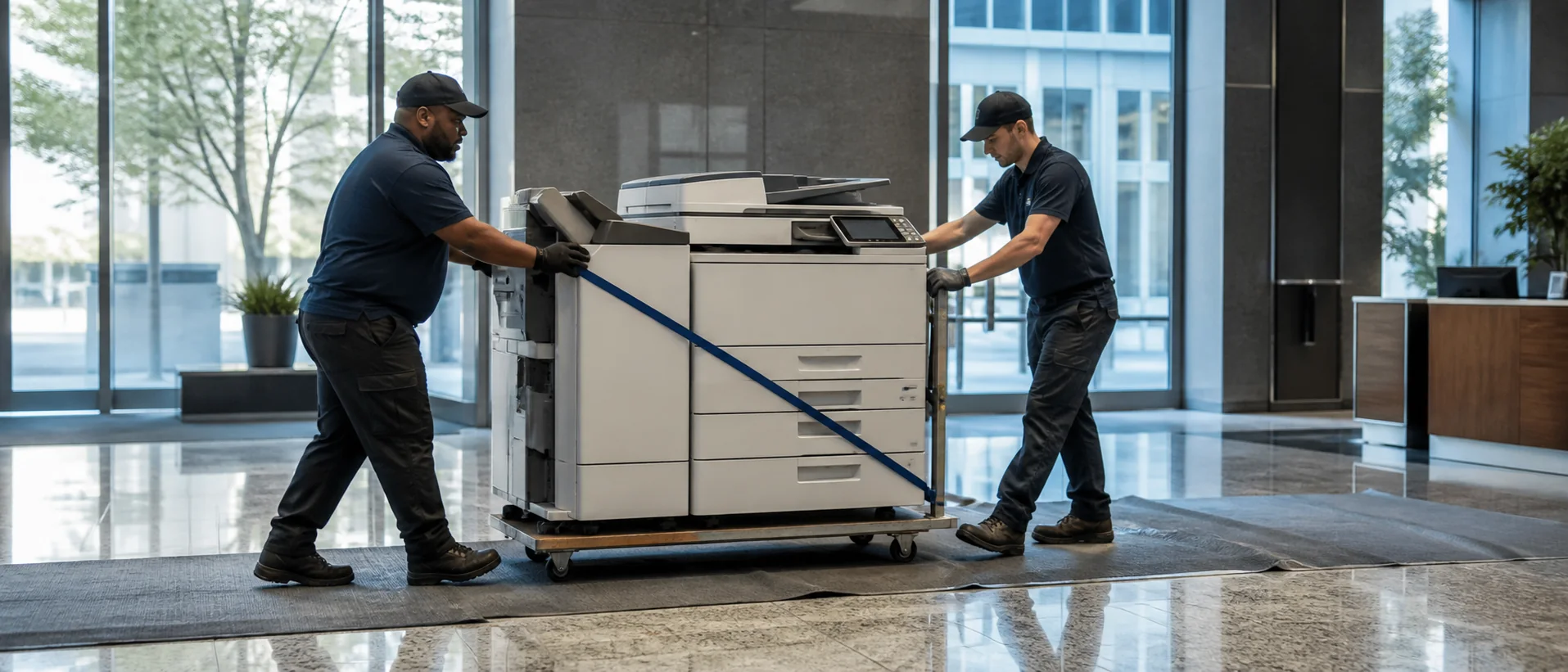
Portland’s technology, professional-service, healthcare, apparel and creative organizations create varied print and scanning demands. Salem adds state government, while Eugene, Bend, Medford, Corvallis and eastern communities support education, healthcare, manufacturing, tourism and regional commerce. Buyers often want to reduce paper and energy use, but environmental goals work best when they also improve the actual fleet.
A strong Oregon office copier price comparison uses meters, document interviews and service geography to determine what equipment should stay, change or disappear.
Make Oregon copier sustainability operational and measurable
Duplex defaults, sensible color permissions, energy settings and secure release can reduce waste without disrupting employees. Fleet consolidation may also help, provided departments retain practical access and a backup path for critical work.
A managed print services assessment should show current devices, pages, energy use assumptions and proposed placement. Ask the provider to quantify why each change reduces operating cost or unnecessary output rather than accepting a broad sustainability claim.
Use Oregon multifunction printers to improve document capture
Healthcare, government, education and professional teams often gain more from scanning than faster printing. Define searchable PDFs, file names, destinations, user authentication and retention before comparing models. Test real mixed-size and two-sided originals.
Use the copier feature planning guide to identify necessary feeder, OCR and integration capability. Ask who configures the workflow and supports it after installation.
Right-size Portland and regional Oregon office copiers separately
A dense Portland department may need greater throughput and finishing than a branch in Bend or Medford. Use the office copier sizing guide for each site, then standardize user interfaces and security where helpful.
Compare A3 and A4 equipment from real ledger-size output. Smaller A4 systems can provide robust security and scanning, while A3 machines earn their footprint when 11×17 paper, extra trays or advanced finishing are routine.
Verify Oregon copier service across mountains and regional markets
Ask for technician bases, response expectations, parts strategy and travel treatment at every office. A provider’s Portland resources do not automatically establish equivalent response elsewhere. Identify who owns escalation if local partners are used.
Review labor, parts, toner, page allowances and annual increases with the copier maintenance agreement guide. Set supply triggers using actual delivery time and consumption.
Make Oregon copier retirement and replacement part of the lifecycle claim
Maintain a device record with serial number, meter, repair history, finance owner, stored-data treatment and approved disposition. Before retirement, export the accepted settings needed for active queues and repositories without carrying abandoned users or project destinations onto the replacement.
Require written handling for storage media, final meter acceptance, freight, accessories and proof of return. Keep old and new equipment together only long enough to verify secure release and document delivery, then close the former device record deliberately.
Compare energy, paper, service incidents and utilization before and after the change. An Oregon sustainability statement is credible when procurement can explain what left service, why it left and where it went—not merely when a newer model appears.
Compare Oregon copier leases and purchases on complete proposals
Use the copier lease-versus-purchase guide for finance, ownership and return tradeoffs. Then require every dealer to follow the copier quote checklist for hardware, implementation and maintenance. A focused Oregon copier price request should state the environmental, workflow and service goals that matter.
Build a smaller, smarter document system around measured work.
Compare efficiency, scanning and regional support across equivalent proposals.