Apex combines downtown small businesses with data, robotics, medical-device, research, life-science and light-industrial companies connected to the wider Research Triangle. New business parks and flex properties create opportunities for growth, but they also make occupancy timing, laboratory routes and future capacity important parts of a copier decision.
A disciplined Apex office copier price comparison separates current work from planned expansion. Give dealers the same protocols, technical pages, user roles, completed-space survey and acceptance criteria.
Validate Apex life-science records at the controlled repository
Life-science and medical-device teams may capture protocols, test results, training evidence, supplier certificates and annotated technical pages. Run representative non-sensitive files with small labels, mixed sizes and revision identifiers through the precise feeder and destination proposed.
The office copier workflow guide helps define separation detection, searchable capture, naming and exception visibility. Acceptance should end with a retrievable record in the authorized system.
Preserve Apex robotics and manufacturing document detail
Robotics, machine shops and light manufacturers may use drawings, work instructions, inspections, maintenance notes and field-marked pages. Test fine lines, folds and handwriting, interrupt a long batch and reconcile every page.
Use the A3 versus A4 copier comparison when 11-by-17 technical work recurs. Keep wide-format output on a clearly defined specialist route.
Control Apex data, research and professional information by identity
Data, technology and professional-service firms may handle client agreements, architecture diagrams, identity information and protected project files. Apply the commercial copier security checklist to named access, held release, encryption, route permissions, logs, firmware, remote support and storage disposal.
Test normal, temporary and administrator roles. Confirm that removing a user changes panel access and connected repositories without disrupting approved team workflows.
Give Apex professional and downtown businesses right-sized workflow
Consultants, healthcare offices, retailers and entrepreneurs may need reliable scanning, proposals, invoices and customer pages without industrial volume. Test the everyday packet with the people who produce it and record space, noise, paper storage and deadline sensitivity.
A compact business-class device can outperform an oversized floor system when it is supported well and its scan routes match the actual work. Complexity should earn its place.
Size Apex copiers with current workload and future tenants separated
Collect printed pages, scanned sides, concurrent users, longest jobs and fixed cutoffs by function. Label planned hiring, an unfinished laboratory or a future tenant as a growth scenario rather than adding assumptions to today’s requirement.
Apply the business copier sizing method to feeder, processor, trays, finishing and fallback. Price a meter, staffing or occupancy trigger for later expansion.
Choose Apex color capability from scientific and client files
Scientific figures, engineering diagrams and customer presentations may need credible color, while procedures and routine records may not. Compare actual files on everyday stock and inspect small legends, shaded areas and fine lines.
Use the color copier decision guide to set permissions and defaults. Route premium production pieces outside the general office fleet.
Survey Apex laboratory, flex and light-industrial properties after buildout
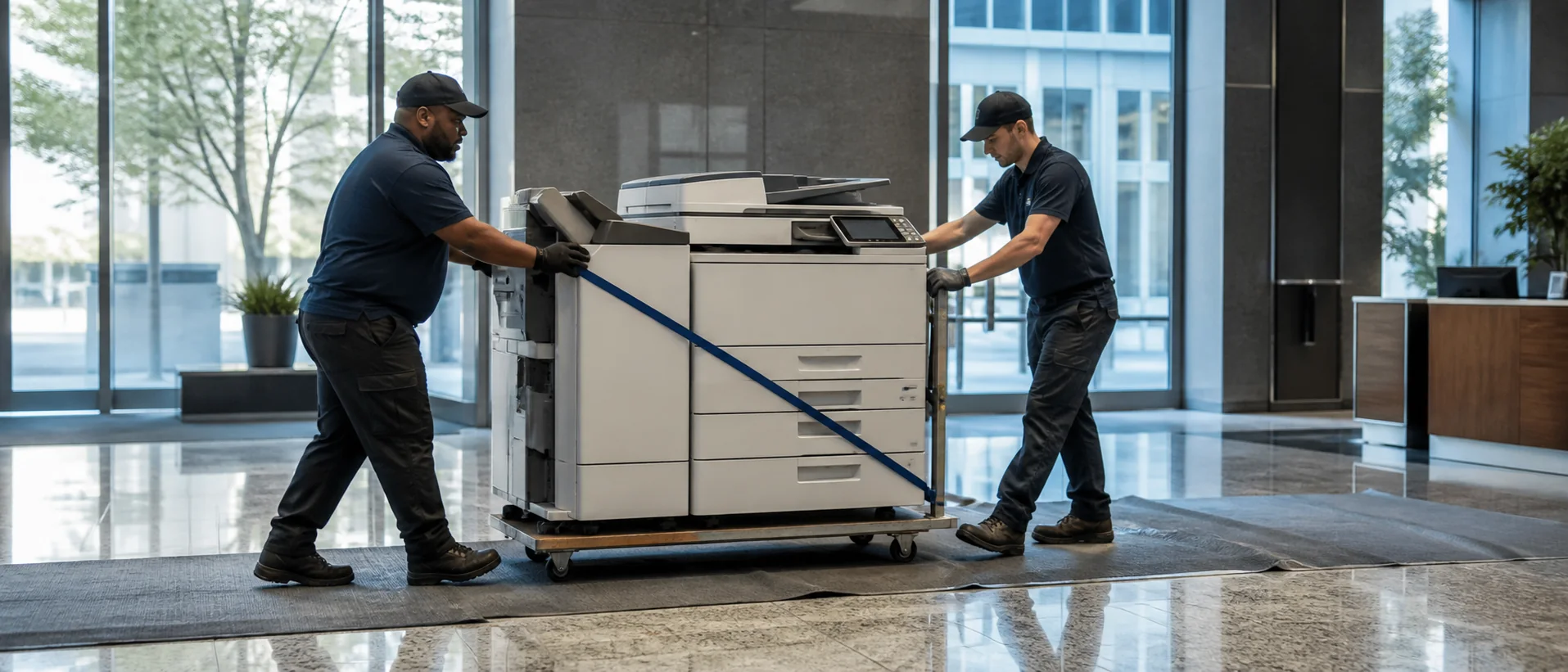
Document receiving, security, elevators or stairs, turns, doors, floor protection, electrical supply, network position and open service clearance. New business parks should be checked again after walls, casework and equipment establish the final delivery path.
Keep office devices and supplies in conditioned administrative space away from shop debris and open docks. Give installation and repair dispatch the same address-level instructions.
Build Apex copier continuity around research and production cutoffs
Identify protocols, shipment evidence and customer documents that cannot wait, then retain serial, configuration and support information outside the primary network. Assign safe-shutdown ownership and an authenticated alternate machine.
Test backup identities and repositories during ordinary operations. Recovery terms should distinguish remote diagnosis, safe access, temporary hardware and restoration of the precise research or production route.
Use Apex managed print evidence as new facilities come online
A Apex managed print services assessment should retain device-level meters, incidents, supplies, controls and purpose. It can standardize new locations without eliminating capacity justified by controlled laboratories, separate buildings, shifts or continuity.
Measure walking, waiting and technical delay before consolidation. Growth should produce a documented fleet plan rather than a series of reactive purchases.
Compare Apex copier support and acquisition across business growth
Clarify pages, consumables, labor, parts, Triangle travel and connected-route support through the copier service agreement guide. Define restoration by the failed research, manufacturing or client process.
Model applications, increases, insurance, moves, extensions, notices and return freight through the Apex lease-versus-buy analysis. Compare Xerox office copiers and Konica Minolta systems under identical evidence.
Request Apex copier prices with growth triggers and acceptance tests
Normalize offers through the complete copier proposal checklist and North Carolina copier guide. Require exact equipment, applications, delivery duties, service ownership and passed tests.
Submit an Apex copier pricing request with files, roles, current occupancy, expansion triggers and recovery criteria.
Compare research integrity, technical precision and measurable Triangle growth.
Price Apex copiers around current work with a tested path for expansion.