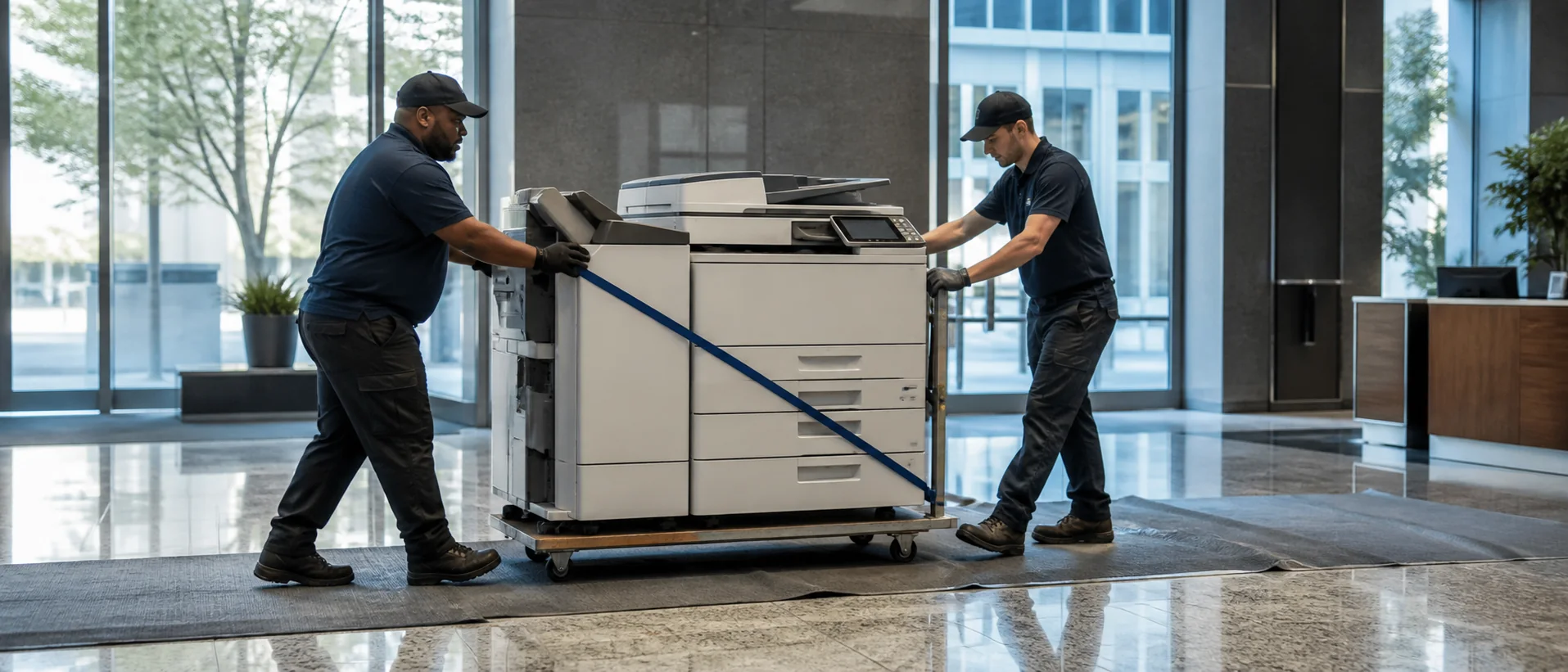
Indianapolis anchors the state’s largest office and distribution market, but Fort Wayne, South Bend, Evansville, Lafayette and smaller industrial communities support substantial document operations of their own. Corporate administration, production offices, clinics, schools, legal practices and warehouse teams often share one copier while asking it to perform very different jobs.
A useful Indiana office copier price comparison starts by documenting those jobs. Specify recurring forms, scan batches, labels, reports, plan sets and client documents before discussing a model. That sequence keeps the machine tied to operations instead of a dealer promotion.
Match Indiana copier features to the work around manufacturing and logistics
An administrative device near a plant may handle purchase orders, quality records, shipping paperwork, human-resources files and occasional 11×17 documents. Paper sources, feeder reliability and scan naming can be more valuable than decorative finishing. Interview the people who clear jams and route files; they often identify requirements missing from an executive-level equipment list.
Determine what size office copier the team needs using average volume, peak runs and active users. If ledger output is routine, compare A3 machines; if not, a robust A4 system may conserve floor space and budget. Avoid using a maximum duty-cycle figure as the normal operating target.
Treat scanning as a primary Indiana office workflow
Healthcare, education, legal and supplier offices increasingly move more pages into systems than onto paper. Define whether employees need searchable PDFs, direct folders, email, cloud repositories or line-of-business integrations. Test mixed-size, two-sided and imperfect originals rather than accepting a feeder speed from a brochure.
The office copier feature guide helps separate necessary scanning and security functions from optional packages. Ask who configures destinations, trains users and restores settings when a device is replaced.
Measure Indiana copier service by the facility that depends on it
Provider coverage can vary between Indianapolis and outlying markets. Request the assigned service hub, response expectation, escalation route and supply-delivery method for each installation. A multi-location company should know whether the agreement is serviced directly or through partners and who remains accountable.
Use the copier maintenance agreement guide to review base charges, included pages, overage rates, labor, parts and exclusions. For fleets with scattered desktop printers, a managed print services analysis can make total spending visible before new equipment is added.
Compare Indiana copier leasing and ownership on a complete timeline
Leasing can make refresh timing and multi-site budgeting more predictable. Buying can work well where the device will remain useful for many years and service is readily available. Compare the two in the copier lease versus purchase guide, using the full term, maintenance and likely replacement date.
Do not combine finance and service into one vague monthly number. Ask for scheduled equipment payments, service base charges, included volume and all increases separately. If the lease has a fair-market-value return, include return freight and notice deadlines in the decision calendar.
Give Indiana copier dealers one operational specification
Itemize hardware, paper capacity, accessories, software, installation and training using the copier quote checklist. The answer library provides additional guidance on office copier contracts and features. Once the brief is complete, submit an Indiana copier price request and compare the provider’s service evidence alongside the equipment.
Price the documents that keep the facility moving.
Use one written workload and service standard for every Indiana proposal.