Arizona’s copier market is anchored by the Phoenix metropolitan area, but statewide buyers may also support offices in Tucson, Flagstaff, Prescott, Yuma and smaller growth communities. Technology firms, professional practices, universities, healthcare groups, construction companies, hospitality operations and public agencies do not use documents in the same way. The correct starting point is a job list: what the team prints, what it scans, where files go and what work stops when the device is unavailable.
That operating picture turns an unfocused search for Arizona copier prices into a fair equipment comparison. It also prevents a dealer from substituting a familiar model for the machine class the office actually needs.
Plan Arizona copier capacity for growth without paying for empty capability
Phoenix-area offices can grow quickly, move buildings or add departments before a lease ends. A sensible proposal leaves room for expected volume without jumping immediately to a production-class machine. Estimate current pages, peak periods and likely staff growth, then determine the appropriate office copier size. The recommended monthly volume is more useful than a dramatic maximum-duty-cycle figure.
Paper and finishing choices should follow real output. A marketing group producing folded handouts has different requirements from a property office scanning contracts or a clinic releasing protected documents. Compare A3 and A4 copier formats before paying for 11×17 capability, and use the copier feature planning guide to separate daily necessities from optional upgrades.
Protect the device from the conditions around the Arizona office
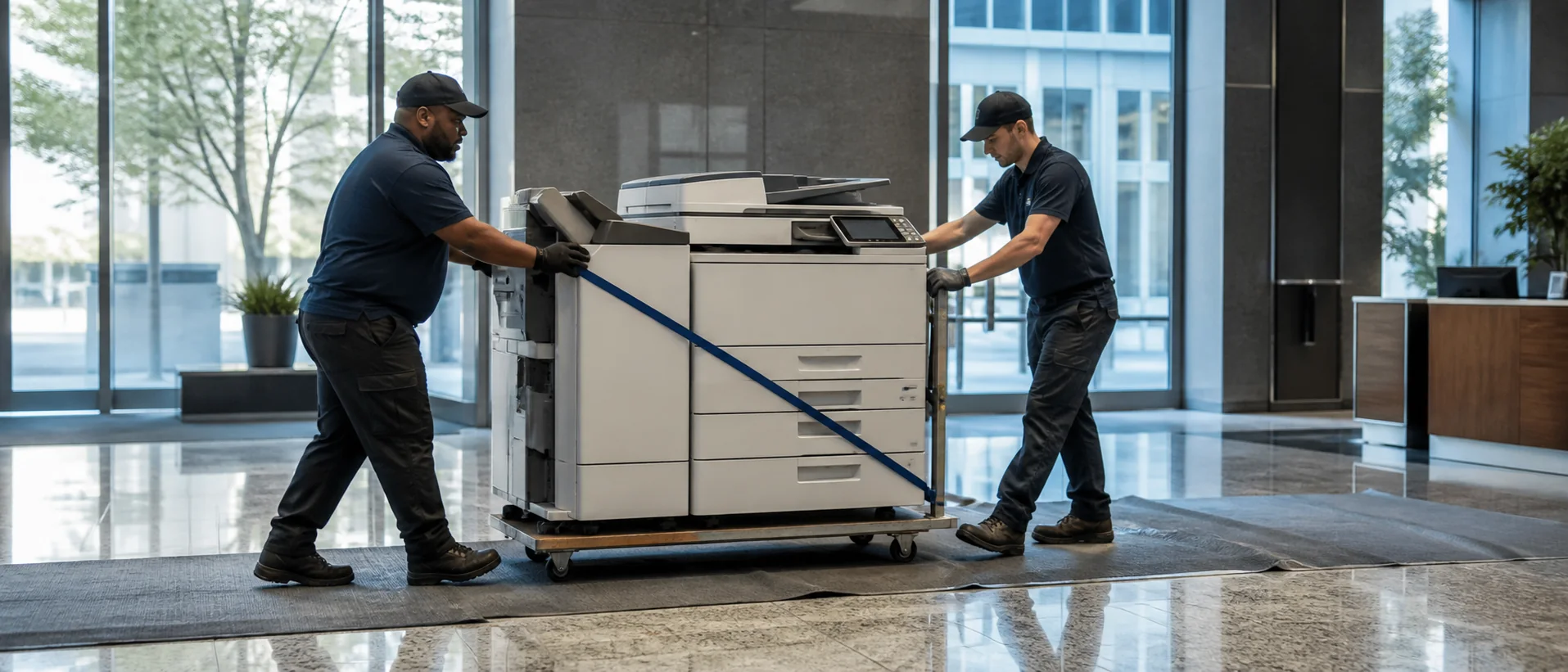
Copiers operate indoors, but Arizona buildings still create practical planning questions. Equipment placed near exterior doors, warehouse traffic or dusty work areas needs better environmental control and cleaning discipline than a device inside a conditioned administrative suite. Confirm electrical requirements, ventilation, clearance for doors and finishers, and the route used to deliver a full-size floor unit.
For multiple branches, standardizing a small number of models can simplify training and supplies, but each site should still be sized individually. A managed print services review can expose scattered desktop printers, duplicate supply inventories and machines carrying the wrong workload. Ask the provider to explain which recommendations reduce operating friction rather than merely replacing every device.
Compare Arizona copier lease payments with the complete ownership cost
Monthly payment is only one line of an Arizona copier lease. Installation, service base charges, included pages, color overages, annual increases, insurance requirements and return freight can materially change the total. Review how copier lease costs are structured and ask for the total scheduled payments, not only the introductory monthly figure.
Buying may suit a stable office that expects long use, while leasing can fit companies preserving capital or scheduling technology refreshes. The detailed copier lease versus purchase comparison covers those tradeoffs. If a provider proposes used equipment, request the meter, refurbishment scope and service eligibility before deciding.
Make Arizona copier dealers answer the same requirement
Dealer quality should be evaluated with evidence: technician locations, normal response times, parts availability, supply fulfillment and escalation ownership. This becomes especially important when one agreement covers Phoenix plus offices elsewhere in the state. Ask whether service is performed by the quoting company or subcontracted, and whether the response commitment changes outside the main metro.
Use the office copier quote checklist to request matching configurations from Canon, Xerox, Ricoh, Sharp or Konica Minolta providers. When the workload is documented, a single Arizona copier quote request can produce proposals that are easier to compare.
Give every provider the same workload.
Compare equipment, service and contract cost without letting configurations drift.