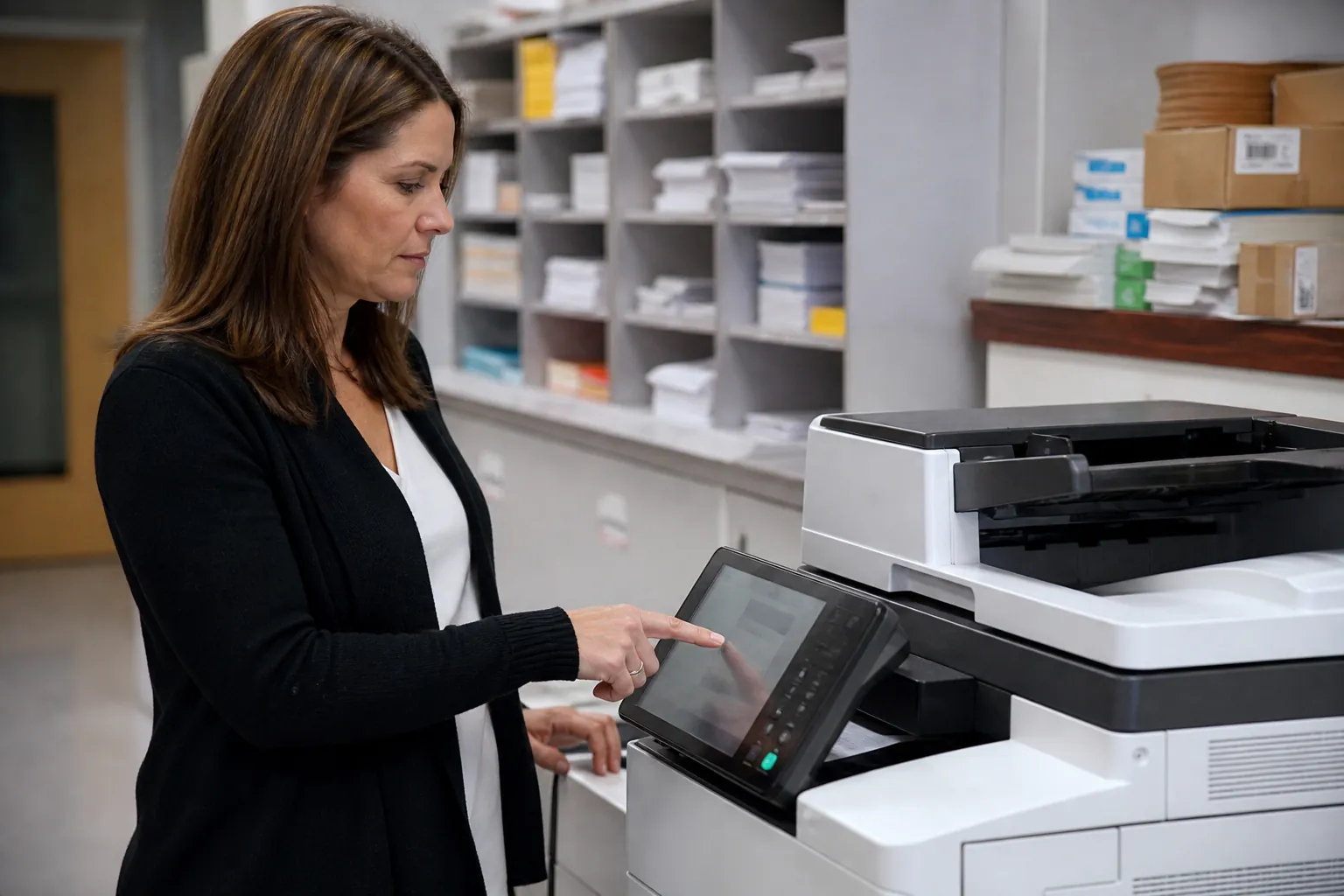
Why is it smart to lease an office copier?
Leasing can be smart when the business values predictable equipment payments, preserved capital and scheduled replacement more than the lowest possible long-term ownership cost. It is only smart after the configuration, service, total payments and exit terms are understood.
Use this answer to define the requirement, expose meaningful differences among proposals and verify the equipment, service or contract term that supports each claim.
Know when copier leasing solves a real business problem
Identify the cash-flow, technology or replacement benefit the lease provides. Compare that benefit with financing cost, contract length and return work. Avoid using a lease merely to make an oversized configuration look affordable. Keep service and page charges visible throughout the term.
Turn this copier question into a written requirement
Write the answer into the request for proposal, including the measurement or contract term that proves it. Ask every provider to identify the exact option, setting, service obligation or workflow assumption behind the recommendation. Keep the response with the configuration sheet for installation and future account reviews.
What an office copier lease actually covers
A copier lease normally finances the configured equipment. Maintenance, toner and per-page charges may be billed through a separate service agreement even when both charges appear on one invoice. Confirm the exact model, accessories, term, payment frequency and whether taxes or documentation charges are added.
Use the office copier lease cost guide to compare the complete monthly obligation.
Price the equipment around one clear workload.
Give providers the same volume, paper, scanning, finishing and service brief.
Keep one accountable owner for the copier decision
Assign responsibility for the requirement, contract, installation record and later usage reviews. That owner does not need to administer every feature, but should know where agreements, settings and support contacts live. Clear ownership prevents renewal dates, unresolved service patterns and unused licenses from disappearing between departments.
Plan for changes during the copier life cycle
Consider higher and lower volume, staff changes, office moves, software updates and the eventual return, resale or retirement of the machine. Identify which parts of the configuration can expand and which require replacement. A decision is stronger when the exit path is understood before the first invoice arrives.
Check the provider behind the copier configuration
Ask how the dealer installs this requirement, trains users, stocks parts and handles repeated problems. Compare response territory, escalation and continuity rather than accepting a general service promise. The exact hardware matters, but the provider determines whether its capabilities remain available during daily work.
Connect this answer to the complete copier decision
Research why is it smart to lease an office copier alongside the office copier prices guide, copier lease versus buy comparison, Office Copier Buyer’s Guide, current copier brand guide and local copier pricing directory. Use the office copier answer library for narrower contract and feature questions, then carry one consistent requirement into the copier quote request.
- Configured equipment value
- Lease term and total payments
- Service agreement shown separately
- Upgrade and early-termination language
- Renewal, buyout and return terms
- End-of-term notice deadline
Related buyer questions worth resolving
Closely connected decisions include What questions should I ask an office copier dealer, How many pages per minute do I need in an office copier, What does a copier service contract include and What are the hidden costs of a copier lease. Resolve them before comparing final proposals so price, capacity, service and contract assumptions stay aligned.