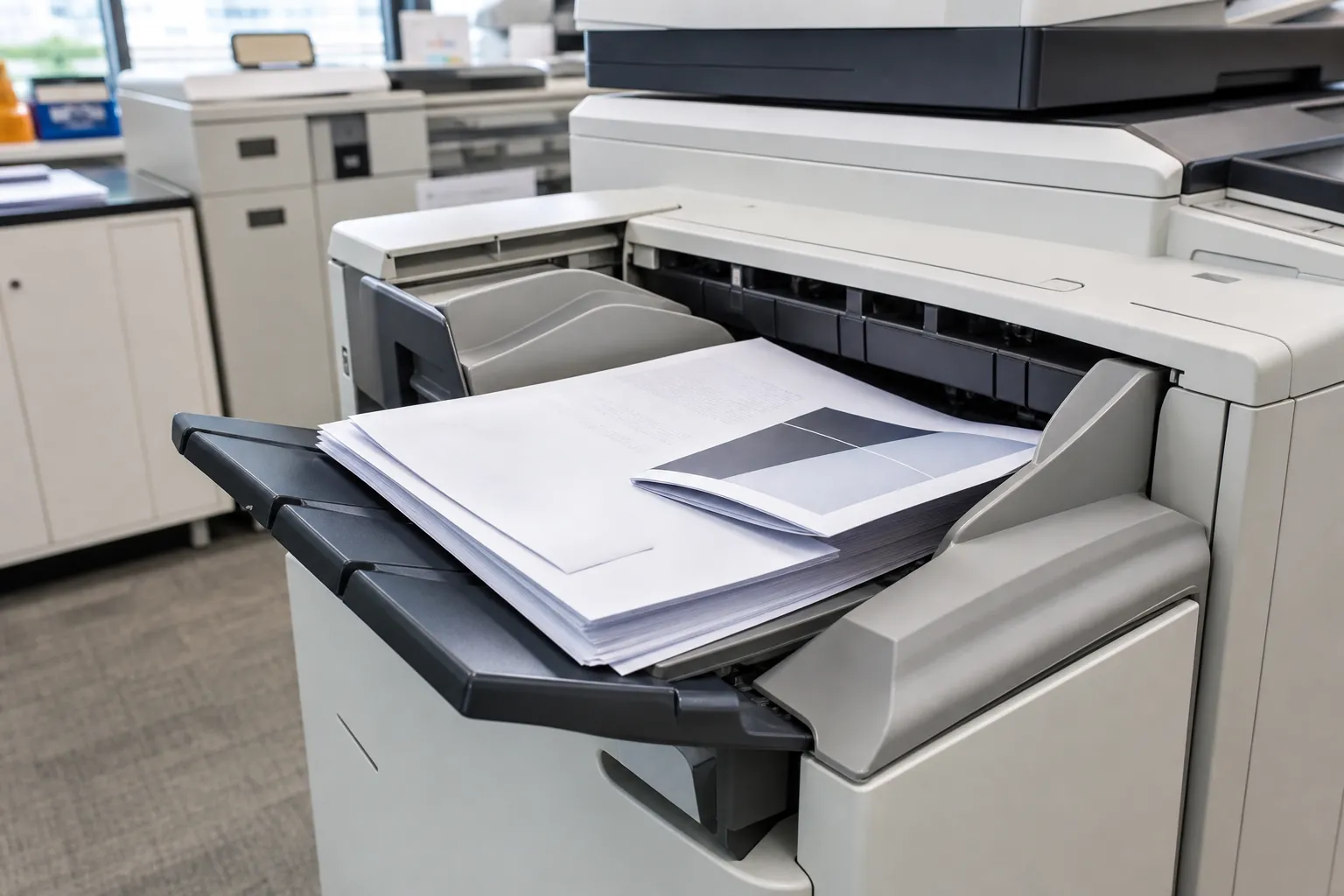
What are the common needs for office copiers in growing medium businesses?
Growing midsize businesses commonly need scalable paper capacity, fast duplex scanning, role-based access, reliable service, mobile and cloud compatibility, cost reporting and capacity for peak jobs. Growth should be planned with measured headroom, not a production-class machine purchased on speculation.
Use this answer to define the requirement, expose meaningful differences among proposals and verify the equipment, service or contract term that supports each claim.
Plan copier capacity around specific growth triggers
Record current pages, users and scan workload, then define what changes at the next hiring or location milestone. Identify expandable trays, finishing and licenses. Compare one shared copier with multiple workgroup devices and include outage risk. Review usage after six months so growth assumptions do not become permanent overcapacity.
Apply the answer to a midsize office
A midsize office often needs enough scan speed, paper capacity and service coverage for several teams without paying for production-class hardware. Document departmental peaks, permissions and growth, then compare one stronger shared system with a distributed fleet using the same five-year assumptions.
Measure office copier workload before selecting a model
Use several representative months of meter or print-management data. Separate black-and-white and color impressions, identify busy periods and include work currently outsourced. Maximum duty cycle is not a substitute for a recommended operating range.
Use the office copier sizing guide to structure the review.
Price the equipment around one clear workload.
Give providers the same volume, paper, scanning, finishing and service brief.
Check the provider behind the copier configuration
Ask how the dealer installs this requirement, trains users, stocks parts and handles repeated problems. Compare response territory, escalation and continuity rather than accepting a general service promise. The exact hardware matters, but the provider determines whether its capabilities remain available during daily work.
Put the promise into the equipment and service proposal
Require the provider to identify the model, accessory, setting, software, service obligation or contract clause that makes the answer true. Put recurring subscriptions and exclusions beside the equipment price. If the result depends on work after delivery, assign the responsible party, completion date and acceptance test before approving the proposal.
Normalize the quotes before comparing price
Put every proposal into the same table: equipment, accessories, term, service, pages, overages, software, setup, annual increases and end obligations. Mark substitutions and assumptions. This prevents a provider from winning on a lower headline number created by leaving a required component outside the comparison.
Connect this answer to the complete copier decision
Research what are the common needs for office copiers in growing medium businesses alongside the office copier prices guide, copier lease versus buy comparison, Office Copier Buyer’s Guide, current copier brand guide and local copier pricing directory. Use the office copier answer library for narrower contract and feature questions, then carry one consistent requirement into the copier quote request.
- Average and peak monthly pages
- Users and typical job size
- Color and paper-size requirements
- Scanning and finishing workflow
- Security and administration
- Complete equipment and service cost
Related buyer questions worth resolving
Closely connected decisions include What size office copier do I need, Should I buy a new or used office copier, What security features should an office copier have and What is copier cost per page. Resolve them before comparing final proposals so price, capacity, service and contract assumptions stay aligned.