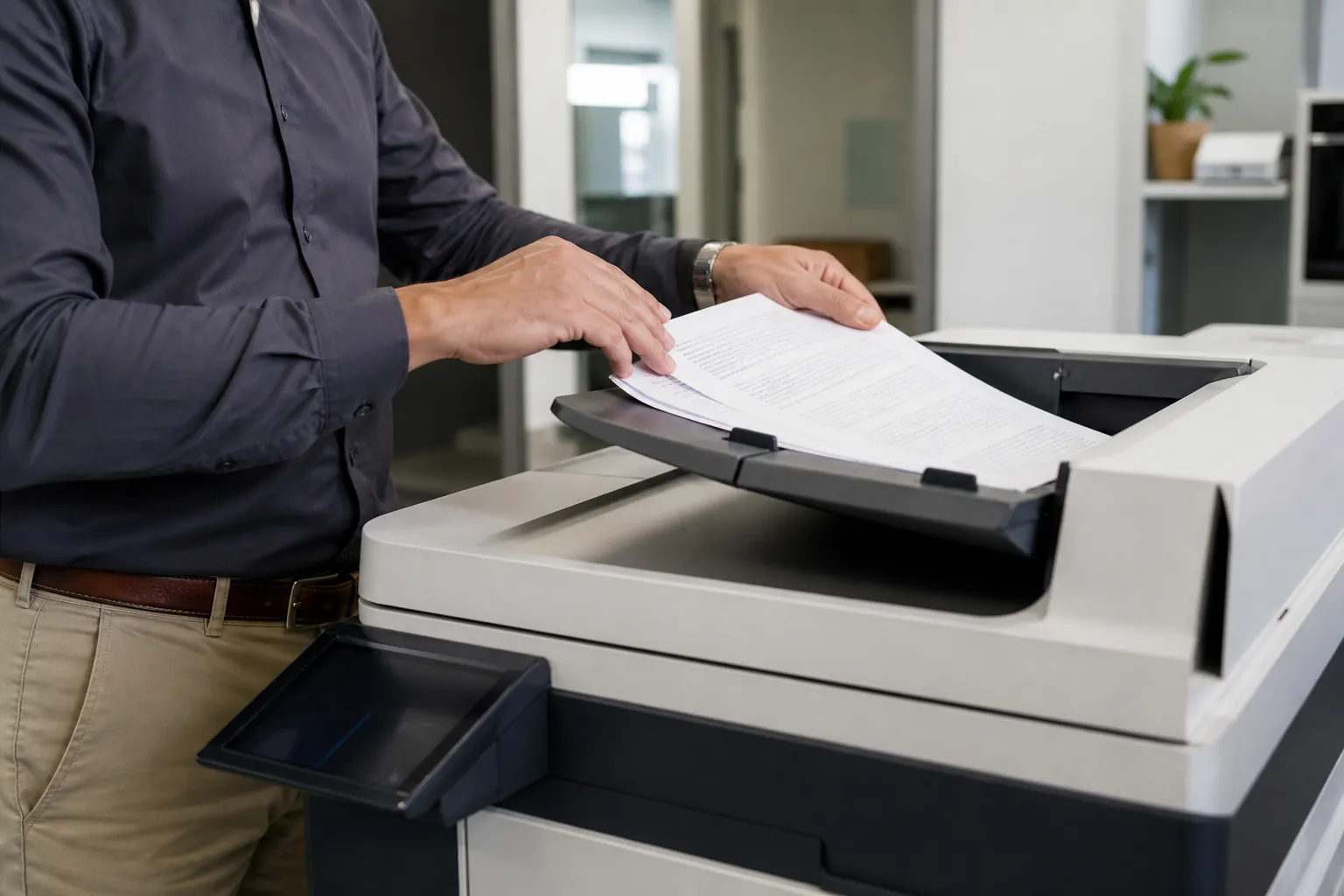
How does leasing an office copier save costs for startups?
Leasing can reduce a startup's upfront cash requirement and spread equipment cost into predictable payments. It does not automatically lower total cost. Savings appear when the leased configuration is right-sized, the term matches growth and service minimums, fees and upgrades are controlled.
Use this answer to define the requirement, expose meaningful differences among proposals and verify the equipment, service or contract term that supports each claim.
Protect startup cash without creating long-term waste
Compare the lease deposit and payments with a compact purchase, managed service and the cost of existing workarounds. Model a move or headcount increase before signing. Favor a shorter or flexible structure when uncertainty is high, and avoid rolling an old balance into a future upgrade.
What an office copier lease actually covers
A copier lease normally finances the configured equipment. Maintenance, toner and per-page charges may be billed through a separate service agreement even when both charges appear on one invoice. Confirm the exact model, accessories, term, payment frequency and whether taxes or documentation charges are added.
Use the office copier lease cost guide to compare the complete monthly obligation.
Apply the answer to a smaller or growing business
Smaller organizations should protect cash without accepting an oversized machine or an inflexible term. Forecast near-term hiring, verify the minimum service charge and confirm whether the device can move, add paper capacity or support another workflow. Favor a clear configuration and responsive support over features no one will administer.
Price the equipment around one clear workload.
Give providers the same volume, paper, scanning, finishing and service brief.
Make training part of the solution
Identify the few settings and workflows employees must understand, then require role-appropriate training and a short reference. Train an internal administrator separately. Revisit adoption after thirty days; a feature that users bypass with email, desktop printers or manual steps is not delivering the value used to justify it.
Keep one accountable owner for the copier decision
Assign responsibility for the requirement, contract, installation record and later usage reviews. That owner does not need to administer every feature, but should know where agreements, settings and support contacts live. Clear ownership prevents renewal dates, unresolved service patterns and unused licenses from disappearing between departments.
Account for peak demand and exceptions
Average monthly use can hide deadline days, large scan packets, specialty paper or departments that cannot wait. Describe the busiest credible condition and the exceptions that require another process. The right proposal handles normal work efficiently and has a deliberate answer for peaks instead of being permanently oversized.
Connect this answer to the complete copier decision
Research how does leasing an office copier save costs for startups alongside the office copier prices guide, copier lease versus buy comparison, Office Copier Buyer’s Guide, current copier brand guide and local copier pricing directory. Use the office copier answer library for narrower contract and feature questions, then carry one consistent requirement into the copier quote request.
- Configured equipment value
- Lease term and total payments
- Service agreement shown separately
- Upgrade and early-termination language
- Renewal, buyout and return terms
- End-of-term notice deadline
Related buyer questions worth resolving
Closely connected decisions include What happens at the end of a copier lease, How much does an office copier cost, Should I choose a color or black-and-white office copier and How long should an office copier lease be. Resolve them before comparing final proposals so price, capacity, service and contract assumptions stay aligned.